
Add Row
Add Element
Stingray Studio Media Logo
update

Stingray Studio Media

update
Add Element
  • Home
  • Categories
    • Corvette history
    • Corvette stories
    • performance modifications
    • performance reviews
    • Corvette ownership
    • Community events
    • Clubs & Organizations
  • Featured Dealership Spotlights
  • Corvette Shop Directory
  • Showroom & Car Lot Listings
Add Element
  • update
  • update
  • update
  • update
  • update
  • update
  • update
April 03.2025
3 Minutes Read

Classic Muscle Car Showdown: Dodge vs. Chevy – Who Wins?

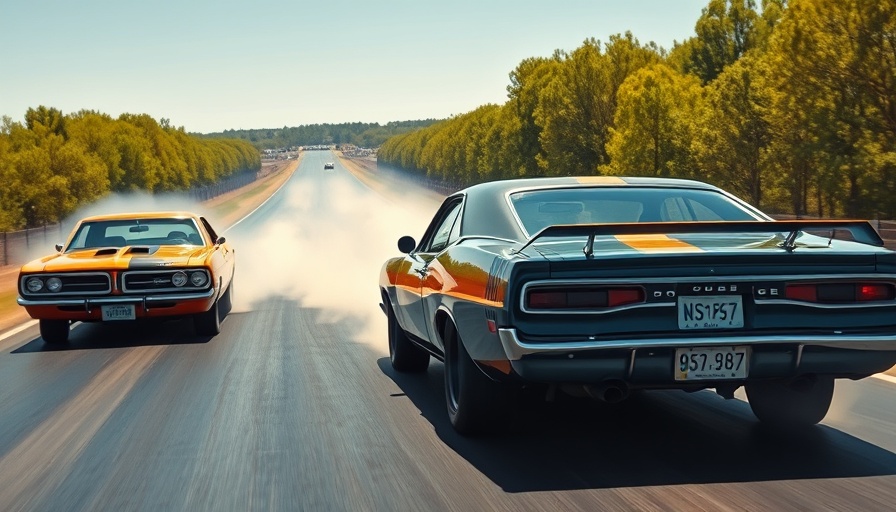
Dodge vs. Chevy drag race at a racing strip with trees in background.

The Legendary Rivalry: Dodge vs. Chevy

For decades, the rivalry between Dodge and Chevrolet has ignited passion among car enthusiasts and fuelled some of the fiercest battles in American muscle car history. Icons of performance like the 426 HEMI and the 427 big-block V8 represent the pinnacle of American engineering, each with its loyal followers. This conflict isn't just about speed but also about culture, innovation, and tradition, making the battles on the drag strip a thrilling spectacle.

Engines that Roar: A Closer Look

In the recent drag race that saw the 1967 Dodge Coronet R/T pitted against the 1968 Chevrolet Corvette, the engineering prowess of these machines took center stage. The Coronet, equipped with a solid-lifter 426 HEMI, boasts a factory rating of 425 horsepower soaring to an impressive operational figure thanks to modifications that bump its compression ratio to 11.75:1. The Corvette, on the other hand, holds a 427 cubic-inch V8 with triple two-barrel carburetors, rated at 435 horsepower. The real-world performance of both cars was astonishingly close to the manufacturers' claims, showcasing the durability and power of classic muscle cars.

The Moment of Truth: Drag Race Breakdown

During the drag race, the Coronet staggered through the track with a time of 10.97 seconds at 125 mph, which is commendable. However, the Corvette asserted its dominance with a blistering 9.58 seconds at 141 mph. The raw power evident in the Corvette's engineering speaks volumes about the performance benchmarks set by Chevrolet in the late 1960s. It’s not just about the numbers; it reflects dedication to pushing limits that these legendary automakers have long embraced.

Modern Context: Interest in Classic vs. New Models

The thrill generated by classic muscle cars sees fans still eager to explore the past. Car dealerships are now offering vintage models like the Chevy Corvette that resonate with nostalgia yet integrate modern capabilities. While local Chevrolet dealerships are busy displaying low-mileage Corvettes from the late 60s, they also boast the latest iterations. The duality of maintaining the classic muscle car legacy while welcoming futuristic designs creates an inviting space for aficionados and the curious alike.

Why This Matters: A Cultural Legacy

Understanding the differences between Dodge and Chevy isn't just a mechanical discussion; it's a narrative that’s deeply entwined in American culture. These brands represent much more than cars; they encapsulate generations of innovation, style, and rivalry. They beckon individuals to appreciate performance as an art form, prompting enthusiasts to immerse themselves in the history and evolution of automotive design.

Main Takeaways: What Drives You?

Whether you find joy in the throaty roar of a Dodge or the sleek lines of a Chevy, the essence lies in the passion for speed and craftsmanship. Today’s enthusiasts are encouraged to consider what vehicle reflects their personality and lifestyle. With modern upgrades available, the chance to own a piece of the performance history from either side of the rivalry has never been more accessible.

As you're likely feeling the excitement screaming for your next classic muscle car or simply seeking insight into this timeless rivalry, consider visiting your local Chevrolet dealership to explore both classic and contemporary models that capture the spirit of this legendary competition.

Corvette history

9 Views

0 Comments

Write A Comment

*
*
Related Posts All Posts
02.19.2026

The Story of the NCM Sinkhole: How It Redefined Corvette's Legacy

Update A Sinkhole That Changed Corvette History On February 12, 2014, the National Corvette Museum in Bowling Green, Kentucky, experienced a catastrophic event that would rewind the stories held within its walls. At approximately 5:38 a.m., the ground beneath the museum's Skydome collapsed, leading to an astounding sinkhole that swallowed eight valuable Corvettes. Thankfully, as the museum was closed, no injuries occurred, but the shocking security footage resonated with car enthusiasts worldwide, resembling a scene straight out of a disaster film. Understanding the Geological Underpinnings Bowling Green is famously known for its karst terrain, a landscape that, while appearing solid, conceals voids created by centuries of water erosion of the limestone bedrock. This geological instability ultimately led to the sudden collapse, transforming a tribute to Corvette history into a chaotic disaster site. The sinkhole measured about 40 feet wide and 30 feet deep, signifying not just a loss of physical structure but also a symbolic loss of continuity for the Corvette legacy. The Impacted Icons: Corvette Casualties The sinkhole claimed some of the most significant Corvettes in history, including the: 1993 Corvette ZR-1 Spyder: A one-off concept car that had become a symbol of innovation. 2009 Corvette ZR-1 Blue Devil: A powerful prototype which, remarkably, suffered only minor damage and was driven out with its own power. 1962 Corvette: The oldest of the casualties, which underwent a meticulous restoration and showcased the museum’s commitment to preserving its heritage. 1 Millionth Corvette: A 1992 model that underwent significant restoration to preserve its original parts and the signatures of its builders. The financial implications of the damages exceeded $1 million, but the emotional connection to these vehicles was immeasurable. Each car told a unique story about America’s automotive innovation and culture, epitomizing the pride and craftsmanship behind Chevrolet's flagship. The Recovery Journey: Resilience and Restoration As recovery teams worked to extract the fallen vehicles, the museum began contemplating how to turn this disaster into an opportunity for further engagement with the public. The National Corvette Museum's tireless efforts to restore the damaged vehicles reflected a collective spirit of resilience among car enthusiasts. By 2019, attendance surged by 67%, drawing more visitors who were eager to engage with the 'as-found' conditions of the wrecked cars, now displayed to emphasize the raw impact of the event. Ten Years Later: Commemorating Recovery and Resilience As of 2024, the museum has launched an exhibit titled Ground to Sky: The Sinkhole Reimagined, showcasing a decade of recovery efforts. Visitors can now witness not just the affected vehicles, but also the transformational journey of the museum since that fateful day. This exhibit serves as a reminder of the spirit of perseverance, inviting reflections on the history that brought these storied machines back to the forefront. What You Can Learn from the NCM Sinkhole The NCM sinkhole stands as a metaphor for change and adaptation. For car enthusiasts, it advocates the importance of resilience in the face of unexpected events—whether regarding classic cars or cherished collections. This serves as a powerful reminder that, sometimes, what appears structurally sound can change at any moment. Connecting with Fellow Enthusiasts The saga of the sinkhole doesn't just resonate within the confines of the Corvette Museum; it beckons car enthusiasts from all fields to connect, collaborate and reflect on automotive culture. It encourages exploration and appreciation of the distinctive design and performance that vehicles like the Chevy Corvette bring to the table. As this iconic journey continues, joining community events and visiting your local chevrolet corvette dealer near me can provide a glimpse into the evolving legacy of this remarkable automobile. Each journey may bring new stories, but the passion for performance and design will always remain at the heart of the Corvette community.

02.20.2026

How Motor Trend's Early Coverage Saved the Corvette's Legacy

Update How Motor Trend Resurrected a LegendThe Chevrolet Corvette's debut in 1953 is often regarded as a watershed moment in American automotive history. Despite the initial excitement surrounding its unveiling at the GM Motorama, sales for the 1953 model were lackluster, leading to fears about the Corvette's survival. Customers found the car's features—such as a fabric top that leaked and a somewhat underwhelming automatic transmission—less than satisfying. To many drivers, the Corvette's performance did not yet measure up to the burgeoning image of what a sports car should embody.However, an unexpected turn arrived with the release of Motor Trend’s December 1953 issue. The magazine's comprehensive road test by Don MacDonald not only praised the Corvette for its innovative fiberglass body and advanced suspension, but also drew direct comparisons with European competitors like MG and Jaguar. MacDonald argued that despite some drawbacks, such as the lack of roll-up windows, the Corvette handled and performed impressively on American roads, arguing that these aspects made it a pure sports car.The Power of EndorsementMacDonald’s article came at a crucial time; it legitimized the Corvette in the eyes of skeptical consumers and dealers alike. According to reports, many buyers entered showrooms with copies of the Motor Trend issue in hand, expressing that MacDonald’s positive assessment influenced their decision to purchase the vehicle. This surge in consumer interest catalyzed a notable jump in orders as Chevrolet prepared for increased production in 1954.The magazine's coverage acted as a lifeline for the Corvette. Without this endorsement, it’s conceivable that the dream of Chevrolet's flagship sports car could have ended just a year after its debut. The impacts were profound: from nearly being axed, the Corvette quickly turned into one of America’s most iconic vehicles.A Legacy of Performance and DesignThe Corvette's transformation from a questionable venture to a coveted symbol of performance and luxury can be traced back to that pivotal moment in Motor Trend’s history. As it stood at the crossroads of mediocrity and greatness, the Corvette needed validation to fulfill its promise as America’s first production sports car. The magic of its fiberglass construction and the thrill of a 150-horsepower six-cylinder engine offered an exhilarating combination to those seeking style and performance.In retrospect, the Corvette represents more than just a car; it symbolizes the spirited innovation of the American automotive industry. Today, the vehicle stands proudly at the intersection of luxury, speed, and aesthetic appeal, attracting enthusiasts around the globe—a testament to the impact Motor Trend had on solidifying its reputation.Reflections on HistoryThe success story of the Chevrolet Corvette resonates with contemporary car culture, where journalistic integrity remains crucial in guiding buyers. Motor Trend's review epitomized a moment in time when a single article could change the trajectory of a brand. The iconic status the Corvette enjoys today stems not only from its performance enhancements over the years but also from the early-career challenges that were navigated successfully.As car enthusiasts, reflecting on this legacy is vital. The Corvette reminds us how critical it is to understand the contexts that shape our automotive choices. In celebrating the legacy of the Corvette, we also celebrate the enduring influence of auto journalism, continuously shaping perceptions and driving innovation in the automotive world.

02.19.2026

Discover the Unique Legacy of Corvette and the Damsels of Design

Update Revving Up the Corvette's Legacy In the late 1950s, a groundbreaking shift took place in automotive design—a shift driven by women. Under the direction of legendary stylist Harley Earl, General Motors introduced what would become known as the “Damsels of Design.” This pioneering team included women from various creative fields, including fashion and architecture, who were tasked with reimagining how cars interacted with their drivers. The result was more than just beautiful cars; it was a revolution in thinking that resonated with functionality, comfort, and a focus on the female driver. A Closer Look at the Damsels' Impact on Design The Damsels of Design were meticulously selected for their skill and expertise, not as a nod to novelty. Their innovative contributions focused on practicalities often overlooked by their male counterparts—like storage solutions for bags, ergonomic control placements, and features that catered to drivers of different heights. A standout among their works was the customized Corvette named Fancy Free, which highlighted not only performance but also comfort, featuring design elements like a purse storage area and subtle interior modifications. This marked a significant step toward inclusivity in automotive design, giving women a well-deserved voice in a predominantly male industry. A Historic Automotive Exhibition: The Spring Fashion Festival In 1958, the Damsels showcased their creativity during the Spring Fashion Festival of Women Designed Cars. This unique exhibition brought a series of tailored vehicles to the public eye, where attendees could appreciate the influence of women in shaping automotive aesthetics. With lavish displays of colors and materials, the festival reflected a broader social shift as car manufacturers began to realize the importance of appealing not just to men, but also to women, who were increasingly becoming the primary purchasers of family vehicles. The event showcased cars that bore personal touches and thoughtful adjustments, underscoring the idea that a car could be both functional and reflective of the driver's lifestyle. The Lasting Influence of the Damsels Although the Damsels of Design program dissolved after Earl's retirement, its impact resonated throughout the automotive industry. Features such as retractable seat belts, ample storage options, and makeup mirrors became staples in later models, translating the Damsels' vision into enduring vehicle features. Notably, Ruth Glennie's Fancy Free Corvette embodies this legacy of balance between functionality and iconic design, appealing to drivers of both genders. Empowering Women in Automotive Design The legacy of the Damsels shines a light on the importance of diverse perspectives in creative industries. Their groundbreaking work opened doors for future generations of female designers, proving that innovation thrives when varied experiences are brought to the table. Today, the automotive field continues to evolve, yet the fundamental lessons learned from the Damsels remain significant. Their story is not just about cars; it’s about breaking barriers and reshaping industries through collaborative vision and ingenuity. The Corvette: A Story of Continuous Evolution The Corvette stands as a symbol of the merging of artistry and engineering excellence, constantly reinventing itself to meet the needs of drivers. While technical specifications and performance metrics are essential, the aesthetics and user experience are equally crucial, thanks to early programs like that of the Damsels of Design. As car enthusiasts continue to celebrate the rich history of the Corvette, the contributions of women in its storytelling and design should not go overlooked. Conclusion: Celebrate the Journey To truly appreciate the evolution of the Corvette and its design legacy, it’s vital to explore stories such as those of the Damsels of Design. They not only shaped an iconic vehicle but also marked an important chapter in the integration of broader perspectives within the automotive industry. For car enthusiasts and designers alike, understanding this history enhances the appreciation of the luxury and performance vehicles on the market today. As you delve into the history, consider how design continues to evolve. Join the conversation about inclusivity and innovation in automotive design.

Terms of Service

Privacy Policy

Core Modal Title

Sorry, no results found

You Might Find These Articles Interesting

T
Please Check Your Email
We Will Be Following Up Shortly
*
*
*